Medicine has always been a huge passion for me, but it has mostly neurology and psychology that interested me the most. Yet, when I discovered cardiology, I realized just how broad and interesting all other topics of medicine are, and how useful they are, even if I won’t pursue them as a speciality.
When I was convinced me to look into cardiology topics, I was bored. I probably wasn’t going to pursue that whatsoever, so I may as well deepen my knowledge on neurological topics. Yet, when I opened the several websites and textbooks, I was transported to a world of medicine I hadn’t had a clue about before. I mean, there were simple topics from the functions of the needs of cells or the synchronization of the two pumps of the heart, to extremely complex deep dives the interventricular septum structure or the wall between ventricles or the calculations of cardiac output.
Cardiology is sort of like the neurology for the heart; a cardiologist have to be just as precise as neurologists, especially cardiothoracic surgeons, as a mild mistake can cost lives.
Cardiology, again just like neuroscience, has so many sub topics for every topic there is in it, as they explore every nook and cranny of the heart.Take the venous system for example, which consists of every vein in the body, and is how veins connect with other blood vessels around the body. The venous system itself is separated into two main circuits; the systemic (left) and pulmonary (right). These both rely on blood vessels to keep blood moving and flowing through. Now in these circuits are the veins, and in the veins are the ones that carry and transport deoxygenated blood and the others that transport oxygenated blood, and this dive into veins is shallow compared to the deep dives into much more complex topics in cardiology.
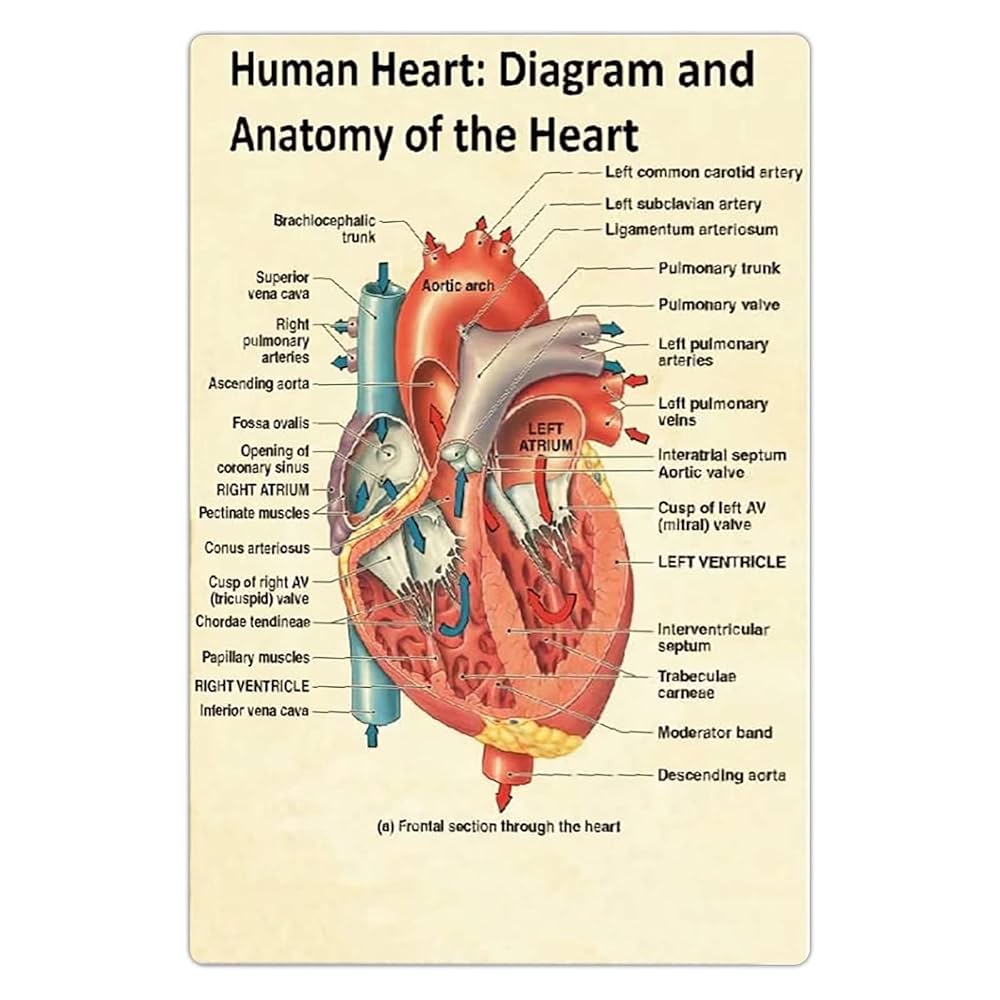
The above is one of the complex diagrams that are literally required viewing for anyone trying to get into cardiology, as the kind of diagrams simplify the relatively hard concepts, making it much easier for anyone to get into it.
The one thing that is amazing about this topic is the difference in people across the world. While many bodily functions function similarly or exactly the same, whereas the heart can actually significantly differ from person to person, leading to several unique conditions, such as arrhythmia (where the heartbeats are irregularly paced) or heart failure (when the heart becomes too weak to complete the conditions needed to pump blood and several other functions).
The main area of cardiology that intrigued me would easily be the electrical conduction of the heart’s system. Most organs don’t act like the heart, as the heart literally runs on its own electrical impulses, through structures such as the sinoatrrial node and atrioventricular node. Arrhythmia is actually caused by minor disruptions in this system, and it shows how fragile cardiology is. As i have said before, it’s really fascinating how something so mild can have life threatening consequences. Yet, the reason I enjoy cardiology so much is that it reaches far beyond anatomy into disease prevention. Conditions such as coronary artery disease for example, show the importantece of lifestyle management and early detection in patients. On the other hand, diseases like myocardial infractions demand immediate intervention. This balance is what appeals to me most in this field, and the immediate impact doctors have to their patients.
 Scrubbed In Chronicles