Day 1
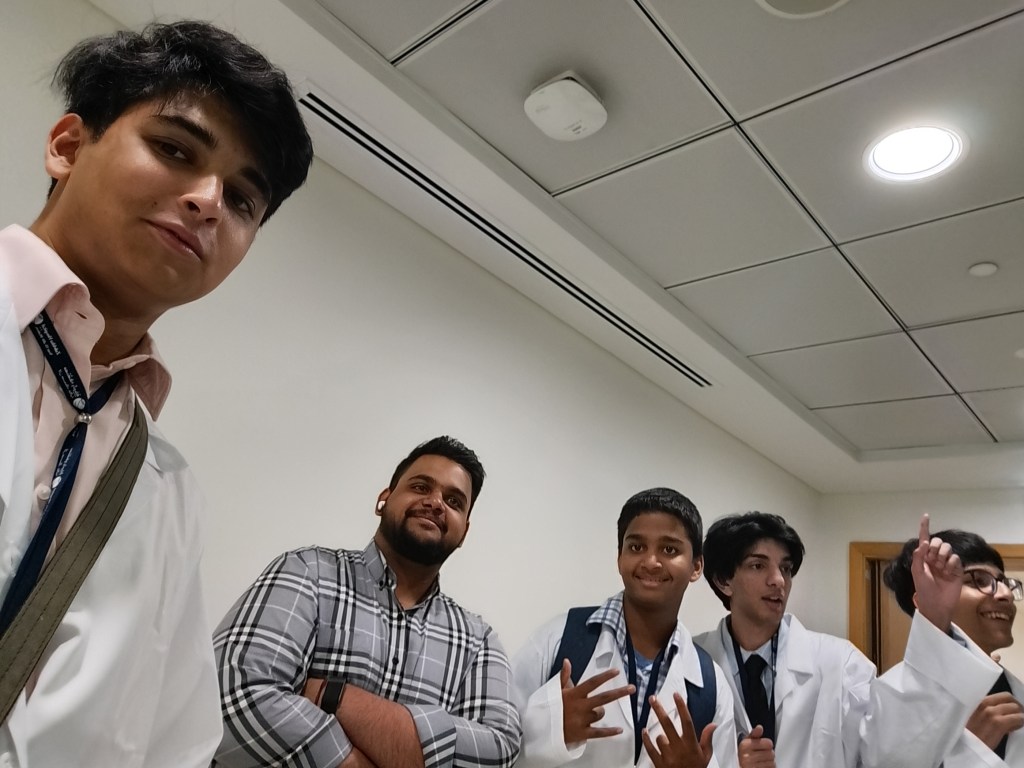
When I arrived in the hospital, I was quite dazed and particularly confused. Most of the staff actually had no clue I signed up for the observership, let alone the fact that there was an observership whatsoever. Yet after going through several blocks and fluctuating through numerous floors, I finally reached the office of the doctor who was actually instructing us, yet at that moment he was completing his regular rounds, leading me and other children (obviously also participating in this observership) to be in a waiting room for around half an hour. These other children were all slightly older than me, which to be perfectly frank made me quite nervous and filled with dread. After all, this was an expensive course, and with being surrounded by older peers, it made me quite anxious, with my heart racing against itself. I’ve never felt like this, even when completing the observership in Kenya, as at least over there I completed my tasks by myself, with no one to embarrass myself against. Finally when the doctor arrived, we all stood in a room feeling quite claustrophobic, where he gave us a brief orientation about the entire hospital and the departments aware of our observership and what we were essentially doing. After he finished speaking, we were all handed a sheet with all the departments and the signature we were required to obtain after viewing each department. We then assorted ourselves into groups of four, (and took a photo with the technician assisting the doctor) and we head on towards the department nearest to us; Radiology, as we also weren’t required to go by the order on the sheet.
The technician who let us in ushered us into his room, where there were numerous safety warning and several graphs and charts on the walls regarding the dangers of radiology, and after showing us quite a few scans on his computer of the most recent patients and what they came in for, he allowed us inside the CT Scan room, where we saw the actual machine (a large overhead circular shape with a bed like shape attached next to it for the actual patient.)
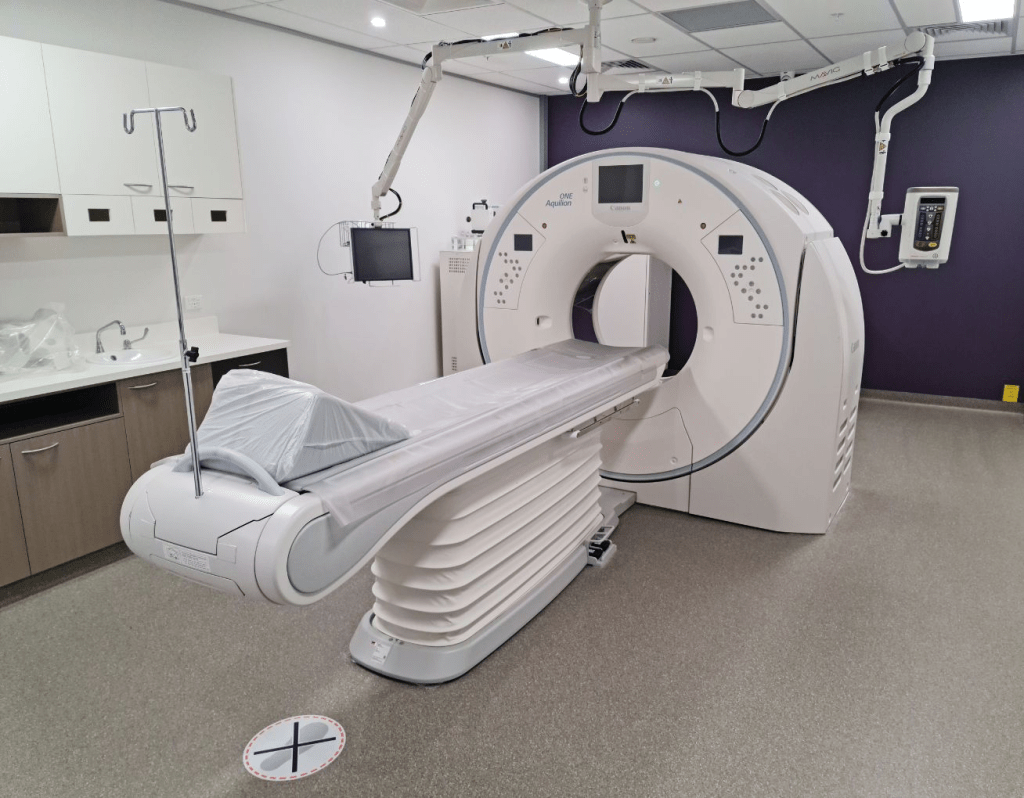
The CT Scan machine
We learnt how pregnant ladies are forbidden to be using it, considering how damaging radiological waves are to a baby. After learning the purpose of the machine, we left this room to be escorted towards the room with the X-Ray machine, where we weren’t really allowed to explore past the doorway. Abruptly, a patient arrived, likely an emergency case, which now led us to be escorted out, without even leaving us any time to actually view the MRI room, yet we just had time to get our signature. Opposite the radiology room was actually the Neonatal Intensive Care Unit, where the nurse took some time after our initial knock. She opened the door, and since another group was likely here before us, she immediately told us to observe in another room. This was a completely empty room, where there was no patients or doctors or any sort of staff. Yet, the wall of this room that connected it to the other room was actually connected due to a translucent black screen, where we were actually able to see an extremely tiny baby, around the size of a SamSung tablet. It was quite still in complete silence, slightly shuffling around the enclosed cot it was inside. After quietly viewing the baby for a few minutes, it started to wail and fuss and turn all around the cot, which led to several nurses having to calm it down and feed the baby. After observing this process, a doctor entered the room me and my team were in and signed our signatures and then proceeded to tell us to leave the room. It was such a short visit yet it was so crucial to me, as the main reason I got interested in medicine was primarily due to my baby brother being sick and meeting the nurses and staff that treated him, and how they worked in such a perfectly synchronized fashion (just as how these nurses were doing a few moments prior.). Right next to the Neonatal Intensive Care Unit, was the actual ICU, which was surprisingly empty when we entered inside. Inside most of the rooms there were cleaning staff who were setting up the television, beds, cupboards and all other necessities but when we actually entered the few vacant rooms there was almost little to no medication stocked inside it and the buttons that are used to call the nurses didn’t work when we tested it. Evidently confused and dazed at why it was so irregular, we asked around the department, who all directed us to the initial nurse who greeted us. She explained to us that the main ICU on a different floor did not have enough rooms to sustain most patients, leading them to form a new one that was still getting set up day by day. Seeing as how we still had quite a lot of time due to this visit and the previous one being tremendously short, we decided to head for the Emergency Room three floors below us. Entering that room made all of us feel quite claustrophobic, as it was quite cramped inside. The receptionist over there was actually quite reluctant to let us inside, yet after we showed proof of the obsevership he let us in, and we walked down the corridor. I noticed Dubai police in the corner of my eye, watching an unconscious person, obviously a reported accident. Luckily before we made our way through the curtains surrounding the vacant rooms, one of the members of my group reminded that even spotting through the cracks of the curtains were technically an invasion of privacy, and considering that literal police were here we decided to quickly get it signed and leave. Thinking that that the ER was going to be our last place yet turned out not to be, we decided to head towards the pathology lab. Seeing as how most of the previous departments were relatively free, this deparment really wasn’t. There were an abundance of staff in every nook and cranny of the ward, and it took us a few minutes of knocking to even be noticed over the constant barrage of voices overshadowing each other. Once they let us in, a nurse quickly showed our team around the department in a hurried fashion, from the machines that tested the blood to the sheets (physical and digital) that they used, before leaving us with the head pathologist.
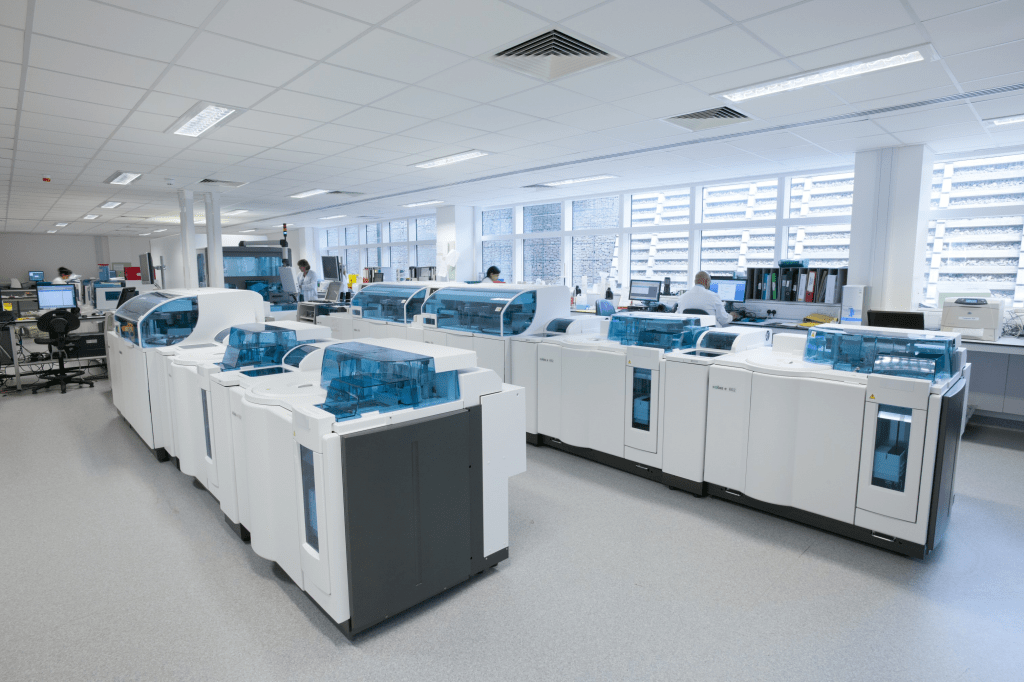
The following are the most accurate depiction of the layout of the pathology lab, and the types of machines.
He was relatively experienced as opposed to the other doctors, yet he was all the more fascinating, giving us an in depth analysis of what pathology is, and what he was currently doing, yet this was overshadowed by his room having a stench of urine, an experiment unbeknown to us. He explained about his job, the study of abnormalities (something I have highlighted about in a previous post, ‘Introduction to Pathology’), and was instructing us on the machines in use and his day to day life in side of his clinic. After nearly an hour of discussing and him asking questions about our (as in my team and myself) passions for medicine, he left the clinic, leaving us all to go home.
Day 2
Considering that the first day was relatively complicated due to unknown departments and still getting used to the entire hospital, I expected the second day to be even harder, yet it was thankfully not. After we got registered and instructed on our tasks much faster than we did yesterday, we immediately got started on going to our respective departments. Me and my team, considering that we did most of the grueling work yesterday, thought we could actually meet some doctors privately and discuss more with them, yet since this was a Friday, most doctors (according to nurses or their colleagues in their departments) actually have taken the day off, leading to several departments not having a department head for the day. The closest department for us was the Audiometry one, where we entered first. It was an extremely closeted space, with only one doctor inside who was relatively reluctant to let us into the room. She showed us the room where they test adolescents and adults hearing levels, assisted with a headset, wires and a button to affirm for sounds.
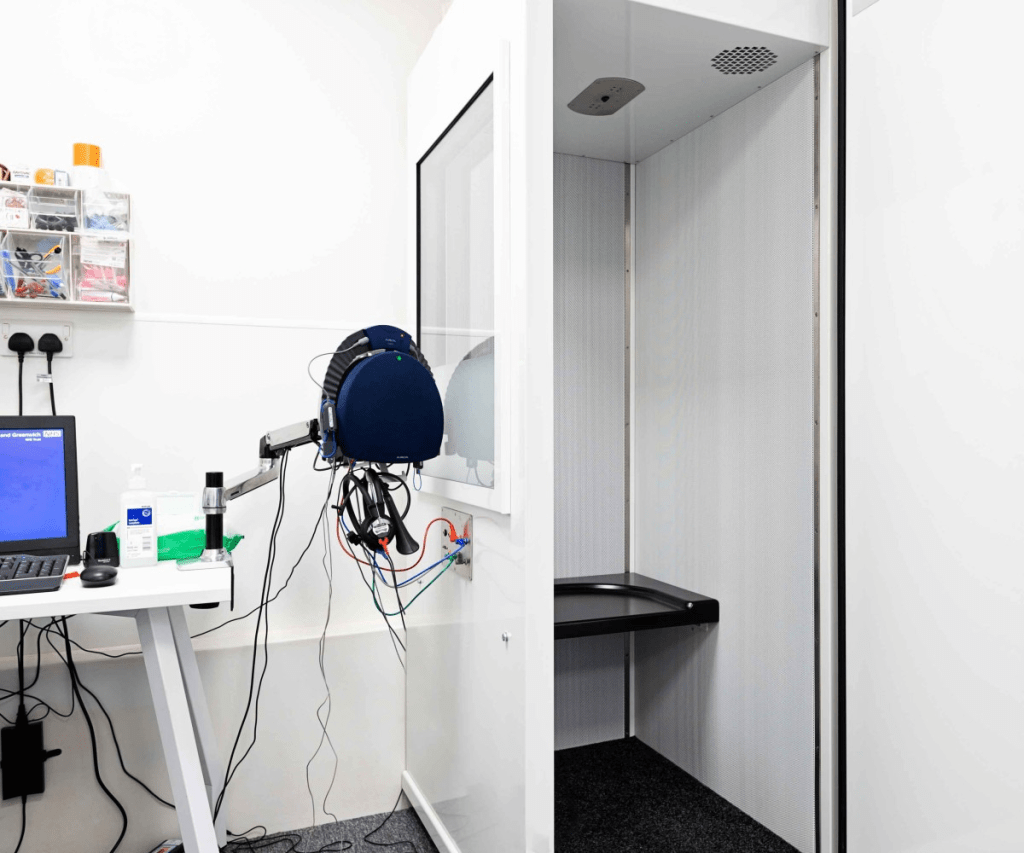
The above is exactly the hearing instruments used and the booths.
We all took turns testing them, yet the sounds got increasingly milder each time to actually test to what dB level we could hear at. Luckily, we all got similar, great results and she actually showed us pictures of her testing this at a more milder scope with babies in the pediatric and neonatal ward, and even showed us videos of her audio testing on disabled kids in pediatric wards, ranging from the age of (roughly) 6 to 18, which resulted in them obviously hearing less well due to their processing lag. After the brief audiometry session, we were able to quickly enter the Pediatric Intensive Care Unit section, yet it was completely isolated and closed. After calling down Dr. Bushra (the doctor who was in charge of us for that day), she had her own special key to actually open the door and lead us inside that ward and show us around, and it was much larger than the new ICU ward that we had visited the day prior. Several nurses came in while Dr. Bushra was going around the ward, obviously setting the room up, yet there were several machines that did have the nurse button working. Yet, it was still lackluster as it was relatively dark and not as interactive as the other departments. After finished with those two, we nearly had four whole hours left, which led us to start to finish the outpatient department, which was really any department that had patients and if we could observe how they treated them. We decided to head towards physiotherapy, yet that department told us to wait for some time and by the time that we were ready the doctor had to leave after a few minutes within talking to us. We then decided to head up to the internal medicine section, which had surprisingly few people waiting outside the offices. After a few minutes of waiting, we were allowed to visit a free female internal medicine specialist. After brief introductions, she explained her job as a general doctor, and her method of referring, and even showed us through her patients rooms and also introduced us to her entire department. We were allowed to discreetly wait outside rooms sitting in chairs observing how the nurses treated a patient and took them to the doctor. While it obviously had to be discreet to avoid invading the privacy of the patient, we could not really make out what the nurse was saying, and only understood through brief body language. After shifting our chairs a bit closer once the patient was in the doctor’s office, we were able to observe their initial check-up, and then the questions and more detailed diagnosis after learning about the patients new problem. The patients visit was quite quick, with the whole process lasting less than fifteen minutes, yet our questions and answers with the doctor took quite a toll on our whole timeframe, with the whole OutPatient Department took nearly an hour. Considering that it was quite close, we decided to head for the Labour Room, (obviously with no patients), yet this nurse wasn’t informed about the observership, which led to us having show her the doctor’s signature, which took a few minutes before she took us through the relatively cramped labour room, with only one bed, yet around two to three chairs to the bed. The following photo is the closest online reference to the room I was in, as we were prohibited from taking photos in there, considering some lost belongings were still there.
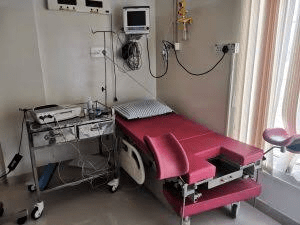
We noticed that there were several machines right next to the bed, which the nurse explained was firstly the heart monitor, obviously to check upon the woman. There was also an IV Pump and several infusion pumps. Right next to the chairs and bed was a tiny separate set up, obviously to keep the baby in after pregnancy. There were also numerous machines for aiding with comfort and mobility; such as birthing balls to help with opening up of the pelvis. The near instant access to staff was also quite noticeable and heartfelt, as there were clear instructions to where to access any member of the department, and a bell for the nurse. She left us to fiddle with the machines and write our notes about the machines and the entire room and it’s atmosphere. While I stated that it was previously cramped, it still felt quite cozy and surreal. After a few minutes, we asked if we could meet any gynecologists, and they actually agreed to that, directing us to Doctor Muhammed, someone who was more than happy to introduce himself to me and my team, and constantly talk about his love for children and passion for gynecology, and a highlight for me was learning he had worked in this hospital just shy of two decades. After we were done conversing with him, we headed on over to the general physiotherapy area, which was a relatively shorter visit than I expected, except for the time we were allocated to the waiting room. After they finally let us in, we were able to actually spot several patient using the aided gym machines (one of the rare instances we actually did see patients inside a department), and the technician working at the moment showed us a full view around the department, from the recovery rooms and other accommodations for the patients, such as a shallow cold pool, and their own makeshift sauna.
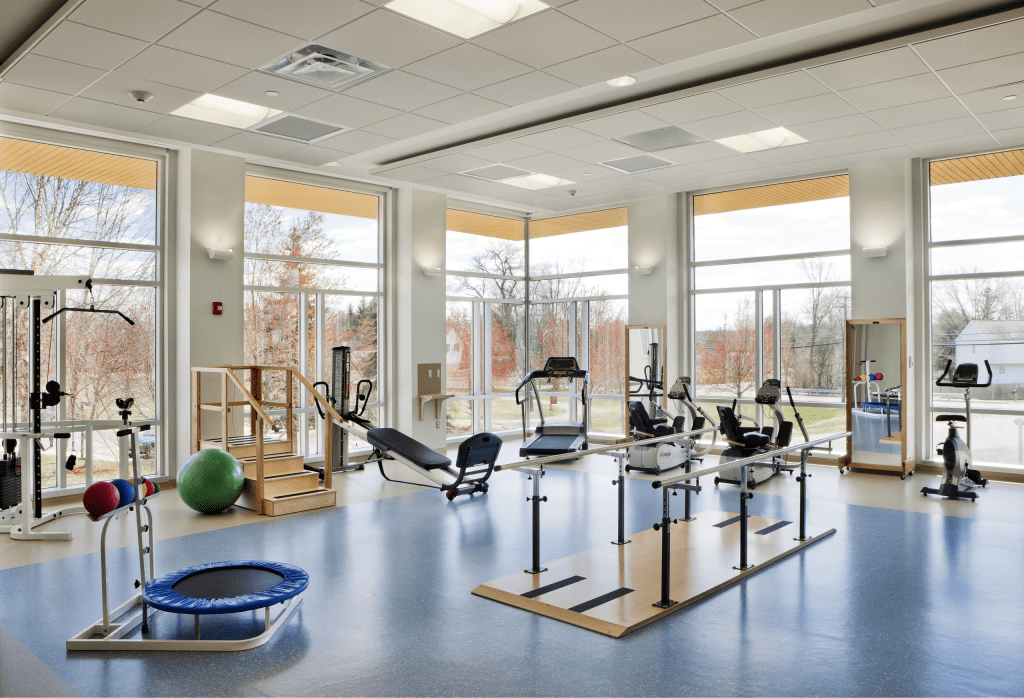
Aided Gyms, with several other ‘childlike’ equipment.
Yet, when it came to the largest part of the entire department, the aided gym, he was only able to show us a relatively smaller portion due to several disabled men and women working, majorly on lower body exercises. He even let us into his own personal technician’s office after the tour and showed us old videos of his old patients getting better and their progress from injuries over a few months. He showed the inner bone work that his surgical team had completed on several patients, and he stated himself that his team specialized in lower body (calf, leg, knee) injuries. After this, he directed us to the main intensive care unit, which while obviously busy, and described how several patients transfer from there to physiotherapy. After all this, we were nearly done with the entire day. To end it on a great note, we decided to pursue the nursing department, which was technically everywhere, as we observed a ‘Miss Supuni’ clean and set up several rooms, and mark the attendance sheets. Since she covered several rooms, this was quite time consuming. We actually ended a bit later, as she took us to the head nurse at her section to get the signature.


Leave a Reply