Day 3
While the first two days were full of departments in every nook and cranny, these last two days were much more mellow, as it took place over the weekend. We started off on a much calmer note, immediately heading towards the dialysis lab, which was one of the few nephrology departments in the entire building, the essential study of treating and diagnosing kidney diseases. When kidneys lose their ability to be able to filter blood effectively, patients are typically referred to the dialysis unit. This certain facility uses machines that artificially filter the waste, toxins, and excess fluids in the blood, basically as a technical replacement for the job of healthy kidneys. This dialysis lab is actually one of the most recently formed departments of the entire department, forming just shy of two decades ago.
The units were equipped with numerous ‘Braun Dialog’ kidney machines, which are tailored for both acute (temporary) and chronic (permanent) kidney failures. We were also taught their specialized procedures, such as how they treated kidney biopsies, and their use of ‘A.V Fistulas,’ which are used to help with long term dialysis. This department was quite large, spanning over two entire rooms that we were allowed to explore. The doctors were extremely nice, and even showed us their prosthetic props for kidneys, which were extremely detailed and realistic, with several parts of it labelled to ensure precision. After we were done meddling with the kidneys, we decided to head towards the reception, the section that was actually second on the list, but was one of the last few departments we went to visit.
We had to wait a lot of time considering that this was sort of a Rush Hour, as there were patients coming up to every receptionist’s stall. After they were done, one of the receptionists directed us to come inside their respective area, and greeted us to the other receptionists. We were allowed to see the sheets they used and how they used quite an old-fashioned telephones to contact doctors, and just like my observership in Kenya a little over a year ago, there were several websites they used to verify insurance policies and their checklist for all the patients. Suddenly a patient arrived and we were able to stand behind the receptionist and see how they treated the patient, directed him and verified the insurance for later patients needing to order medication.
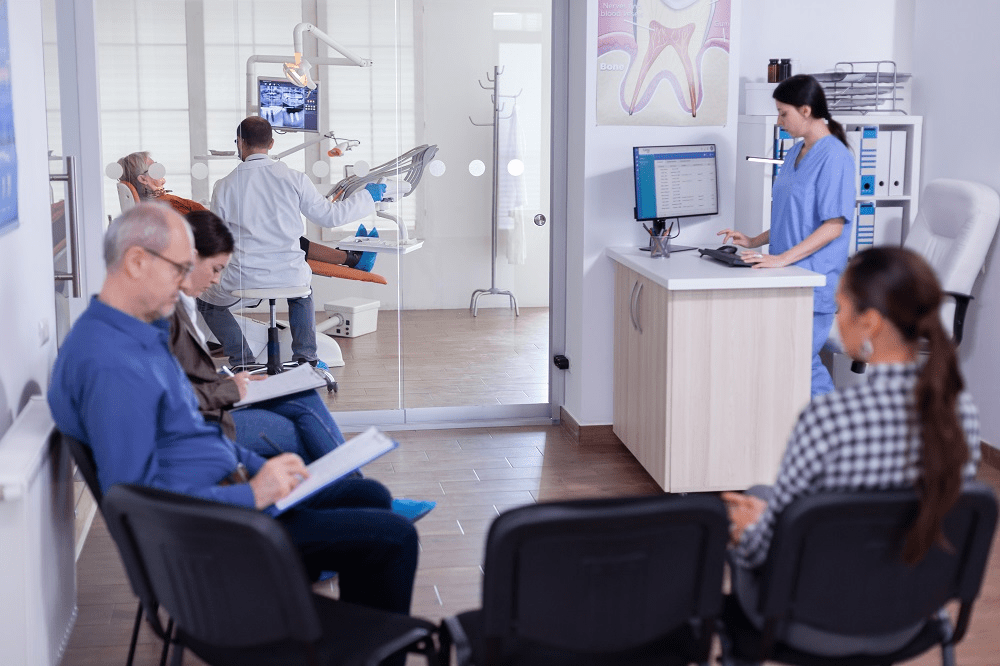
This was one of the longest departments that we went through, but it was so intriguing the way they dealt with patients suffering with grief, with patients who were impatient and angry and how they adapted to every situation. From this experience, I came to the conclusion that the skills receptionists have attained should be applied into every medicinal field, and any field of work in general, considering the kind of people they have to withstand every day. They took us along their personal break rooms and even showed us their interns who we were introduced to. Adding on to that, they all made sure that we all were familiar with all the several systems that they used.
After the receptionist finished explaining everything to us, we moved on to the next department, one of your last ‘long’ departments that we went to, the CATH lab (cardiac catheterization laboratory). The CATH lab was one of the most intriguing and detailed departments, as it is literally the room in which doctors treat heart and blood vessel disorders, with the help of diagnostic imaging equipment, with the primary example of the equipment being the Fluoroscopy unit, which uses continuous X-ray beams to project actual real time moving images of the heart and it’s vessels. While the technician introduced us in, we noticed in the further corner of the room doctors we’re actively performing a surgery, and judging by their tone of voice and the way they looked intently, it was evident this was an extremely delicate operation.
We were told clearly and repeatedly by the nurse at the front of the lab not to make any noise whatsoever or to take any photos, as it’d cause a disturbance. We also saw numerous screens that helped the medical team view the detailed procedure in real time, known as viewing monitors, and there were also a continuous contrast injector that was used for pumping contrast dyes into the cardiovascular system repeatedly. We were also shown many imaging components, such as the DSA, a software able to digitally remove background structures (like bones) so doctors can clearly separate and view contrast dye that moves through blood vessels.
We also saw more examples, such as the C-arm (a large mobile arm that surrounds the x-ray tube on one end and a digital detector on the other, which allows it to rotate around the patient) or the Flat-Panel Detector/FPD (which is another digital sensor that captures the X-Ray beam and converts into higher resolution images) and finally the X-Ray generator (which is a high power unit that energizes the X-ray tube to penetrate deeper tissue tissue and produce clear visuals of the tinier blood vessels). After we were done with this, we were nearly over with the day, and most of the departments we tried to visit were shut down or unable to visit during that time, so we were lucky enough to finish early.
Day 4 Of My Observership
In all honesty, this day was quite melancholy for me, as since I had spent around fifteen hours in this hospital, I felt quite a connection to my team, and I really had treasured the personal moments we all had together. It was such an enjoyable experience, meeting all the doctors and the entire A Learning Lab team was so helpful. They coordinated us with such precision and overall really improved the experience.
Since we were nearly finished with the entire trip except for the inpatient and another outpatient experience, we determined to finish those as quickly as possible. For the inpatient experience, we went back to the pediatric ward, where they actually let us observe much more closely how they treated and diagnosed patients compared to the last time. They let us into the rooms once the patient left, and gave us thorough lectures on the personal hygiene standards in this hospital, showing us the clean equipment they had to use, their cleaning process with their equipment and their rooms, and their overall sense of hygiene, which was much higher than most hospitals in Dubai.
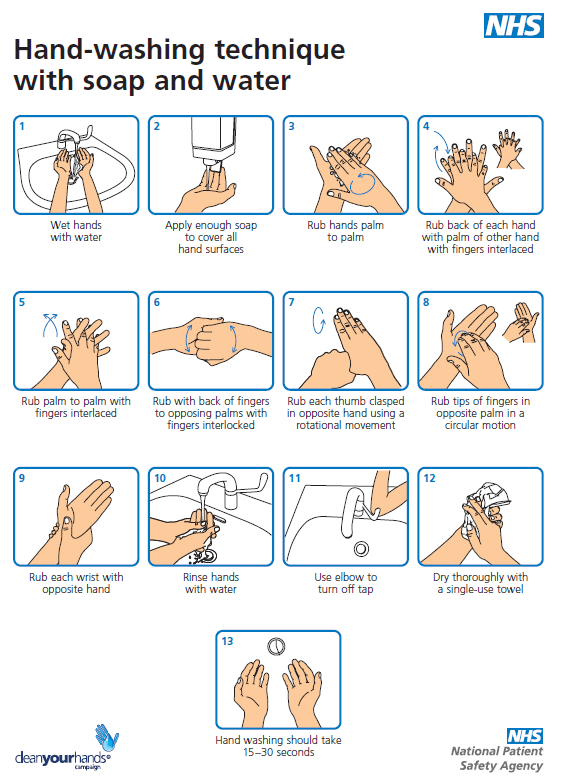
(Official hand hygiene procedure, proscribed by the National Patient Safety Agency)
They also showed us how several of their nurses who sat at the main desks operated everyday, which was in like routine as the receptionists. They retaught us bedside manner, and their overall journey into nursing services, something just as profound as any doctor, especially considering as how they are much more proficient in medicine compared to doctors after medical school. After we were finished with the entire hygiene procedure and the nurses introductions, we were able to actually interact with the patients and ask them how they were right now, yet not discuss sensitive information such as their reason for visit.
After we were finished with our interactions, we decided to visit (for our outpatient department) physiotherapy, both departments we visited quite early on on our trip. We introduced ourselves to a different doctor, as the previous one had a shift change. After explaining our predicament, he gave us the same tour as the last one, yet showed us through the receptionist area, giving us more explanation and an introduction to how the receptionist directed patients, gave them medication or directed them to different departments if needed to. We saw their hygiene protocol just like we did in pediatrics, and they showed us with much more detailed explanations the machines they used, and we were able to see the more reclusive private rooms, in which we were able to see patients actually working out and saw the posters on their walls of their health regimes and schedules. We were not really able to interact with them compared to our inpatient department, yet they did allow us to observe consenting patients around and actually test out the machines and even view the sauna.
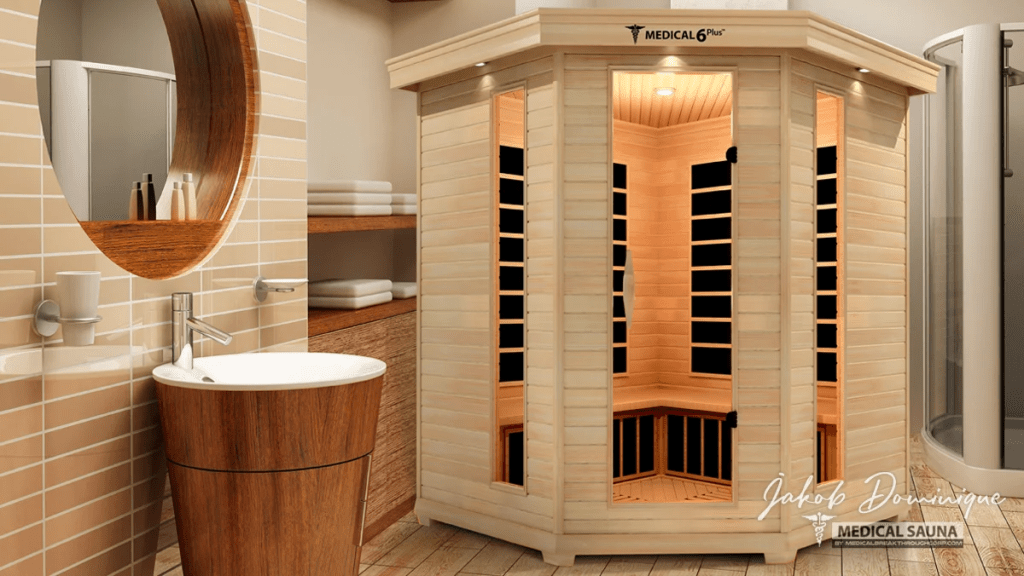
(Typical 4-7 person infrared medical sauna)
After this was done, we had just shy of two hours left, so we decided to go around and actually meet several of the doctors of other departments that we were not assigned to visit. We went to the psychology department and asked around for their brochures, yet all of the psychologists were all fully booked. We then decided to talk to Dr. Bushra, the head doctor who orientated us. She was quite surprised at our efficiency and the fact that we completed all of our tasks much quicker than any of the other groups. We also talked to her about the other amenities A-Learning Lab provided, from tutoring sessions to career advice. After over an hour and half of discussing all this with her, our time was nearly over. In a massive ruckus, all of us handed in our sheets and sent copies of our Emirates ID’s for verification. Then, we all head back home.
It was honestly such a wonderful experience, and my highlight of the summer. Meeting new people and connecting with them on such a personal level in such a short amount of time was something wonderful that happened to me, and every doctor in that hospital was overly nice and welcoming. I would absolutely love to do this next year, and this an experience I highly recommend.

