Sleeping is not a mechanical, ordinary cycle that can easily occur at any time, it’s a chemically structured and synchronized system. Hormones, such as dopamine, seratonin and acetylcholine repeatedly rise and fall throughout the night to shape each stage of sleep, with an example being REM (deep sleep), which acetylcholine is high of. That’s why many sleep specialists recommend not using screens before bed as it can disrupt the brain’s dopamine regulation and dilute the mind’s circadian rhythm (perception of whether it’s daytime or nightime). There are 4 cycles of sleep, the first three phases of NREM sleep (non rapid eye movement, and is when the brain’s glymphatic system starts going to work, and even the cerebrospinal fluids are able to flush out metabolic wastes, after being triggered by a drop in noradrenaline. The waste clearance rate during NREM sleep is roughly about 60% more effective and apparent now as opposed to when awake) and then REM sleep, which is when dreaming occurs. During this time, the levels of monoamines such as seretonin drop whereas acetylcholine levels rise much higher. Memory integration, the most important part of sleep occurs during this time, and research also shows that targeting dreams during REM sleep usually boosts creativity and problem solving. NREM sleep uses slow oscillations for its purposes whereas REM sleeps uses theta rhythms to help with their integration.
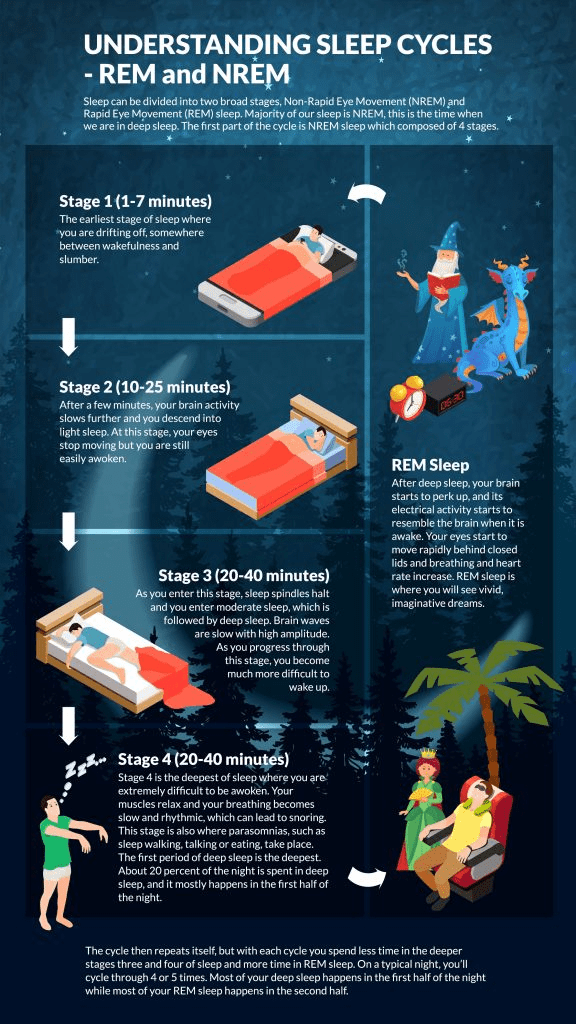
Speaking of how sleep helps with memory integration, the main reason people forget their actual dreams are due to two main reasons. The first is that the brain usually has their dreams in REM sleep as opposed to NREM, and they switch in cycles, meaning that when someone actually wakes up their REM sleep cycle had last been switched long ago, and unless the person suddenly wakes up in the middle of a REM cycle, they will likely forget their dreams a few second into waking up. The second reason is that the brain forgets most things that we deem as irrelevant, and those dreams being quite unrealistic are forgotten often just due to the brain not wanting that to be confused with real life.
The main transition and switch in the brain during sleep is actually how we are able to transfer between being asleep and being awake, which is mainly due to the actions of the ‘flip-flop switch’. This ‘switch’ relies on two different groups of neurons that silence each other mutually. On one side , the neurons are the ‘awake’ monoamingeric nuclei(such as the locus coeruleus, dorsal raphe, and tuberomammillary nucleus) and on the other side are the sleep promoting ventrolateral peroptic nucleus. Due to the fact that they actively inhibit one another in a synchronized fashion, it creates a sort of switch mechanism.
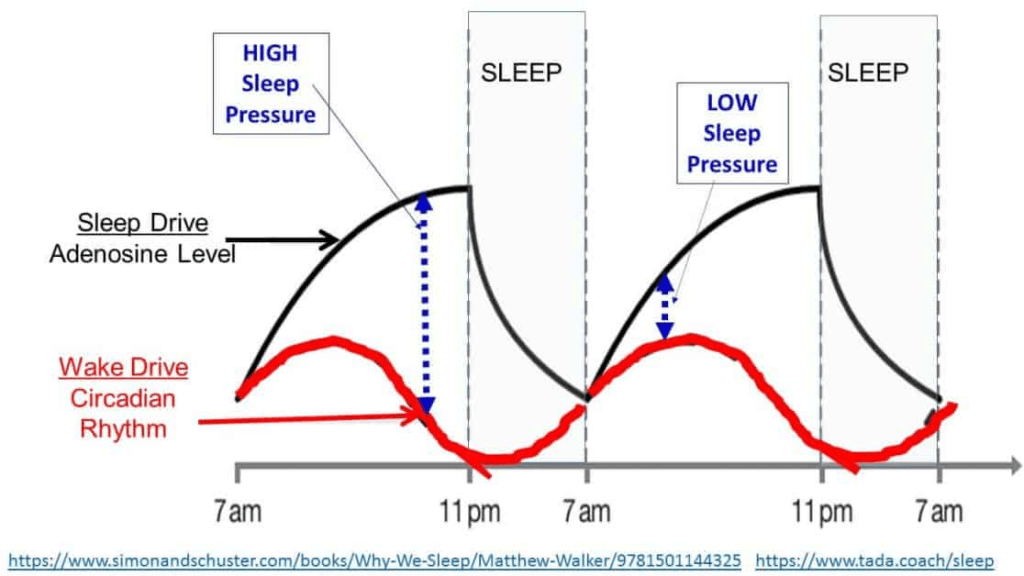
This sort of mutual inhibition makes sure you are either fully asleep or fully awake, meaning there is no such thing as ‘half-asleep’ no matter what movies may suggest. Now to keep this fact true, the oxerin and hypocretin neurons that are located in the lateral hypothalamus act as stabiliziers. They effectively reinforce the wake side of the flip flop switch when you are supposed to be awake, and the same applies for the asleep side of the switch. Adding on to this, while the switch does handle the rapid shifting between awake and asleep, it’s triggered by adenosine, which builds up your natural tiredness throughout the day until its time for you to fall asleep.
In conclusion, the neurological basic and sciences behind dreams and sleep in general is really fascinating, highlighting to me the fact that while our body is complex enough while awake, there are several other factors that come into play while we are asleep which are equally as intriguing.


Leave a Reply