As I have stated in previous blog posts, the human brain during childhood is extremely sensitive and vulnerable, meaning “regular” habits picked up as a child can never be broken even as an adult. This does also mean that the good habits can be picked up, and the brain adapts so much easier as a child as opposed to an adult or even a teenager (this is called neuroplasticity).Yet, this also means that the brain’s baseline electrical environment so much easier to be broken down, and when that balance breaks a seizure occurs. In general, in a healthy brain, every thought and movement and emotion occurs onthe balance of two chemical signals, the glutamate and the GABA, with the first being the one that pushes neurons to fire and pass meesages along wnd the latter being the one that calms neuronal activity and prevents overload. In a brain that undergoes seizure activity, mild disruptions in ion channels that control the flow of sodium and calcium cause the brakes to fail, which causes the glutamate to get stuck and neurons to fire simultaneously in a quite high voltage electrical chain reaction.
Evidently, to make sense of this neurologists use an electroencephalogram (EEG), that can translate complex brain waves into physical patterns on a hospital screen by placing small sensors across the scalp that detects the electrical signal. When seizures occurs the waves are able to identify and differentiate them.
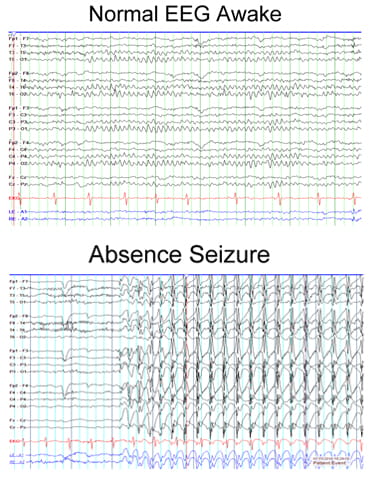
The first type of seizures are called the Absence Seizures, where the wave pattern is a 3 hertz spike and wave, where a sudden synchronized loop is bouncing between the brain’s core and surface. The next main type of seizures are called focal seizures, which are often tied to a structural site, with their wave pattern usually being focal sharp waves, where a localized electrical spark originated from à precise spot. The last type of seizure I will be talking about is the type of infantile spams, which require immediate intervention. They are completely unpredictable and are electrical chaos. By tracking where the signals actuwlly start, doctors can isolate the seizure onsent zone, which pinpoints whether a seizure is localizing to a single region or firing across both hemispheres at once.
Back to a point in the first paragraph, neuroplasticity. While this can be quite a significant challenge to a child, it can also be an asset. If electrical misfires happen over and over, the brain can accidentally learn this habit, and this concept means that untreated seizure pathways can carve deeper holes into the brains wiring over time. This, on a positive note, also means that à child’s brain can re route it’s connections around damaged areas, which means they can recover functions an adult brain would lose forever.
Yet, mapping these patterns isn’t just academic, it helps dictate how we treat the patient. Most doctors start with targeted medications, as certain drugs calm specific ion channels, yet choosing the right one depends whether the seizure is focal or generalized. Some doctors also enforce metabolic shifts, meaning a specialized diet that targets GABA levels. Now if the seizure origin is locked to a single spot, modern neurosurgery can remove the target zone entirely.
As you can tell, neuroscience to me is the most fascinating field in medicine, and epilepsy is such an intricate and complex disease, with childhood epilepsy even more so. Learning about this is special to me, as my own brother had been diagnosed with epilepsy in December of last year. Learning how to read the cellular dynamics and electrical patterns on EEG waves, I’m glad doctors move closer to protecting the mind when it’s most resilient, yet vulnerable.


Leave a Reply