When we are as young as a baby, child, teenager or even as a young adult, our brain is over sensitive to external factors that stimulate us and environmental factors and influences. This means that if someone people in these age groups are close to (such as a friend or parent) demonstrates certain behaviours, it’s quite likely for the child to copy those behaviors and characteristics. This is mainly due to the fact that the brain goes under its main structural and functional development during these ages, specifically in the prefrontal cortex, which is responsible for decision making, emotional regulation and impulse control. Neuroscientific research has shown that brain development actually occurs slightly past the age of 21, and fully stops at around the ages of 24 to 26. This makes adolescents and young adults particularly vulnerable to both positive and negative influences. As a result of this, exposure to substances like nicotine or other dopamine feeding drugs, specific environments or experiences (such as sexual or abusive trauma) usually leads to long term emotional and behavioral consequences (such as acting out, emotional dis regulation).
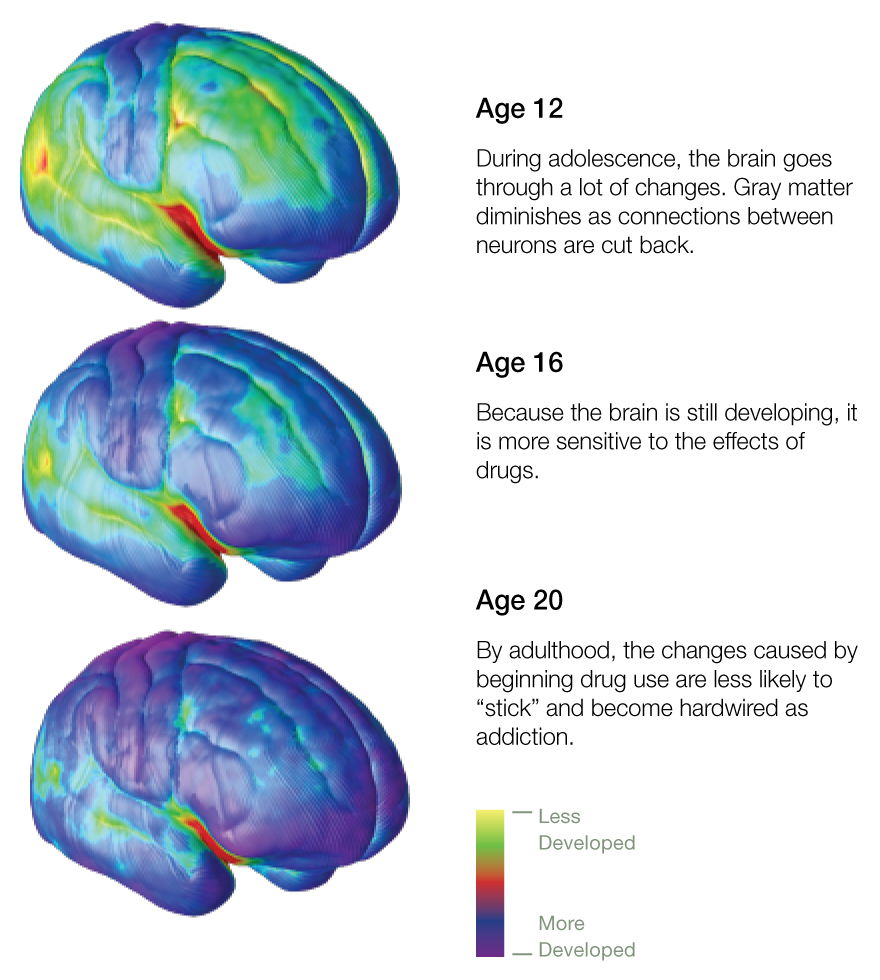
One of the most recognized factors that endangers the young brain is the use of substances such as nicotine or alcohol (this is due to the fact that nicotine exposure during the teenage years commonly leads to neural circuit formation, impair attention and a very likely chance of addiction later in life, commonly through vapes or nicotine pouches. On the other hand, alcohol consumption, even in minor amounts, has been linked to reduction of hippocampal volume, which affects memory and learning, which can even lead to temporary memory loss. The reason these substances affect the teenage and young adult in particular is due to the fact that their brain is also going through synaptic pruning and myelination, interference from these substances in particular can impair function and increase risk taking behavior a significant amount. Yet even with teenagers not taking any of these substances, they can still be affected through abuse and trauma, especially within their own homes. Special studies that have been conducted have shown that repeated exposure to emotional, physical and psychological abuse can result in “toxic stress”, a state where the body’s stress system is activated for prolonged periods. This can lead to high cortisol levels, which when sustained over time can damage important brain structures such as the amygdala, hippocampus and prefrontal cortex.
These changes can negatively affect emotional regulation and memories, and the ability to cope with even minor challenges. An example of this (in the home environment) would be when parents practice actions such as repetitive harsh disciplining, emotional unavailability or pure neglect which can significantly impact a child’s mental development. The essential aspects of good parenting which will have a positive remaining influence in a child would be constant emotional stability and resilience. In contrast to this, children who experience abuse are much more likely to face delays in cognitive development, difficulties in regulating emotions and an increased risk of mental health disorders such as depression, anxiety and stress. Other research also indicates that these types of individuals often struggle academically and socially later in life. This also applies to school, as even though they were intended to be safe spaces for learning, can also become sources of trauma, such as bullying (verbal, social or physical bullying) have shown serious effects both neurological and psychological. Victims of bullying consistently show experienced fear responses, signs of chronic anxiety and difficulty concentrating on long tasks. Additionally excessively punishments from teachers or unsafe environments create a lot of stress and fear, limiting engagement and a student’s academic performance. Adding on to this, research on childhood experiences highlights that early mild trauma can have long term impacts. Individuals with higher exposure are at a significantly higher risk of developing substance abuse issues, developing mental health and even physical health problems much later in life.

In conclusion, the developing brain is much more impressionable and influential by both environmental and social factors, and while substances shows clear risks just like trauma does, understanding these factors is essential in order to protect and support healthy brain development.
 Scrubbed In Chronicles