In all honesty, Neurology was not a field I had so much knowledge in compared to other fields, such as pediatrics or even physiotherapy. Sure, I had participated in that epilepsy awareness event, but my knowledge was just minimal. I mean, sure I was relatively familiar with mental disorders and whatnot, but having enough knowledge to write a whole research paper? Yeah right….Well, it’s been over three months since the awareness event, and I am glad to say what I had previously thought near-impossible, I have relatively completed.
The thing is, Neurology is such a complex subject with so many sub-branches and other topics, it’s near impossible to know every single thing about the brain, yet alone contain all of it into a single research paper. The brain is such a diverse area to study, so the main subjects I wanted to put into this paper are
- Disorders
- Aging
- Social/Emotional Aspects of The Brain
But to state something before I start; I am not the Brad Pitt of neuroscience whatsoever. Even all this knowledge I am boasting about is quite minimal to what actual neurologists have to learn to actually become a neurologist. Yet, neurology is such a fascinating subject, there is always more to learn as the brain evolves and grows. Without futher ado, let’s start this.
Mental Disorders
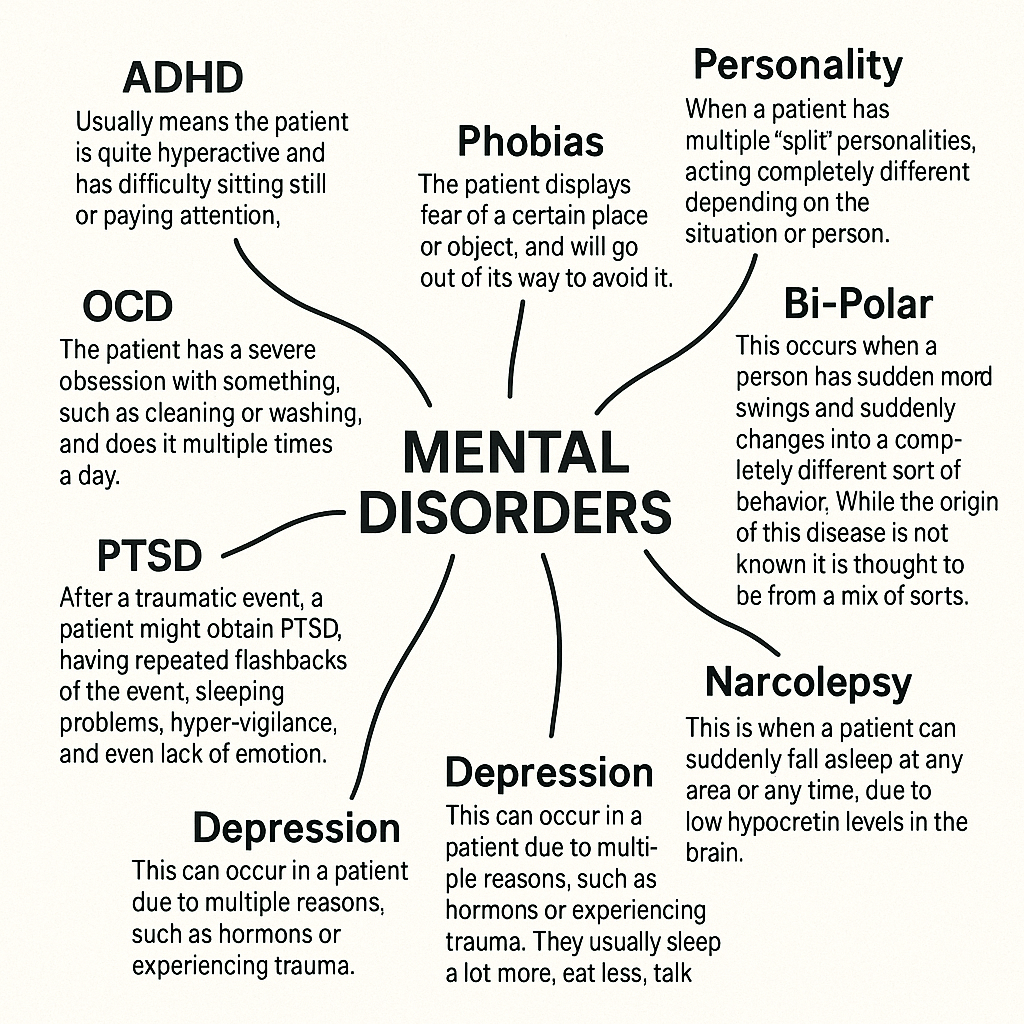
In the brain, there are certain parts of it assigned to certain areas of our life, such as thought, speech or comprehension. When these parts get damaged, whether that be through self-infliction or car accidents, they can lead to brain damage or impairment, which can lead to disorders. Most mental disorders are relatively harmless, such as attention-deficit-hyperactive-disorder (ADHD), not being able to sit still while watching a documentary, or obsessive-compulsive-disorder (OCD), having an obsession with cleaning your glass-model cars. Yet, some can end lives or indirectly cause massive bouts of harmsl such as schizophrenia, alzeihmers, or shock paralysis (yes, it sounds exactly like it’s spelled.)
Yet, there are more reasons for disorders, and the most common of them are
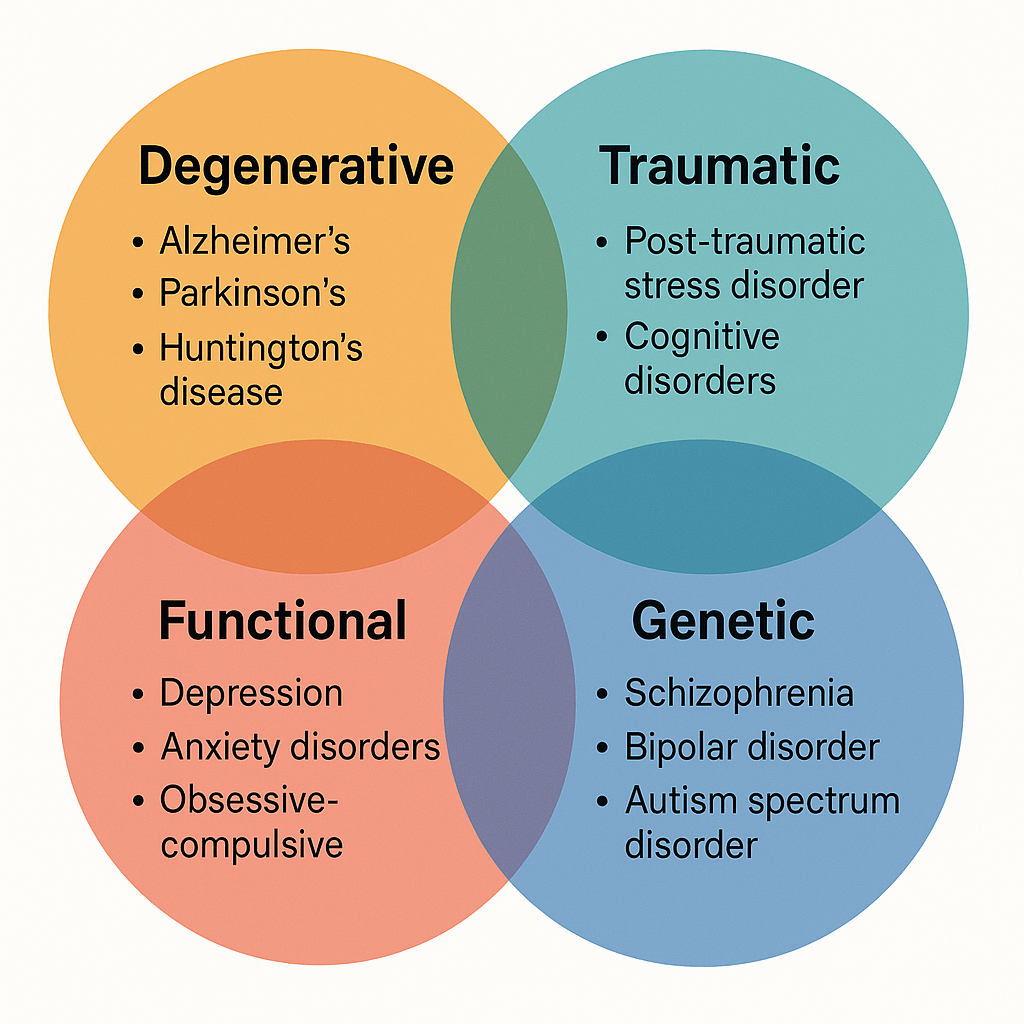
Degenerative; These are mostly in older people. They are due to inactivity of their brain or muscles, making them more prone to crippling and making them weaker as a whole. These mental malfunctions can unfortunately accompany them, such as Alzheimer’s, tending to forget things as mild as grocery shopping to as severe as their own name. While contradicting my previous statement, not all of these disorders are technically ‘deadly’, yet they increase the risk of the elderly person too commit dangerous acts such as self-harm or reckless driving. These diseases are mostly present in elderly people over the age of 70, yet it’s not exactly uncommon for them to be within the range of 50-69.
Genetic; While the most common mental disorders are due to other factors, there are multiple disorders that can be contracted due to genes and genetics. These disorders are mostly uncontractable, yet there are other ways that they can be contracted other than genetics. Yet, just due to the fact that one family member had the disease does not mean that you will surely get it, as it can just be a one-time thing. These genes are mostly common in men (86%), yet some women also contract it.
Traumatic; These sort of disorders are quite common, and caused by experiencing traumatic events. These events can range from car accidents to war-time. Now, just experiencing these events does not directly mean that the patient will contract this disorder, yet it’s quite common to contract these disorders after these experiences. The most common disorder out of this type is post-traumatic-stress-disorder (PTSD), which have the symptoms of habing repeated lucid dreams about the events, and not being able to function properly, and mostly only being able to speak about the event.
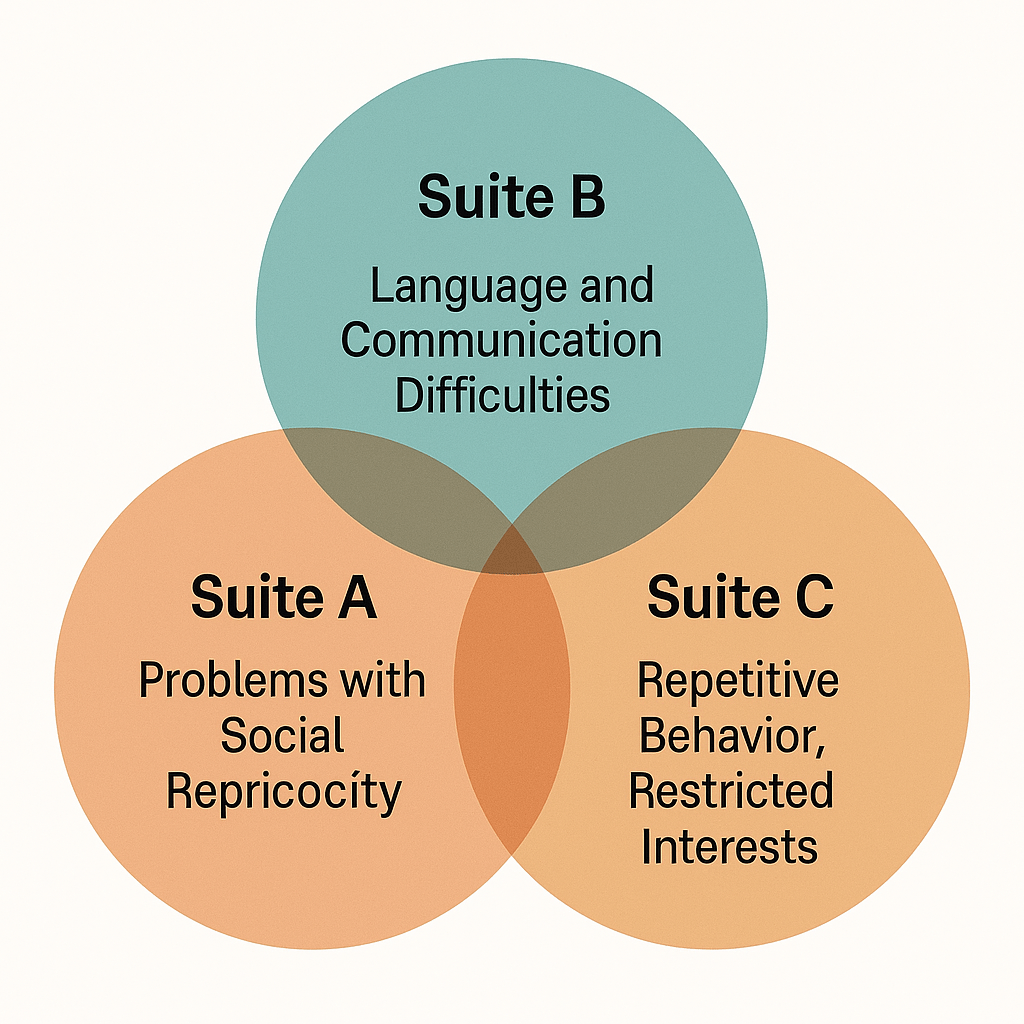
Now, there are multiple disorders that can be diagnosed on a spectrum, noticabely autism. Some people without autism show different forms/suites of behaviour, and the common behaviour in all suites lead to being diagnosed with autism. The common suites are presented in the diagram below.
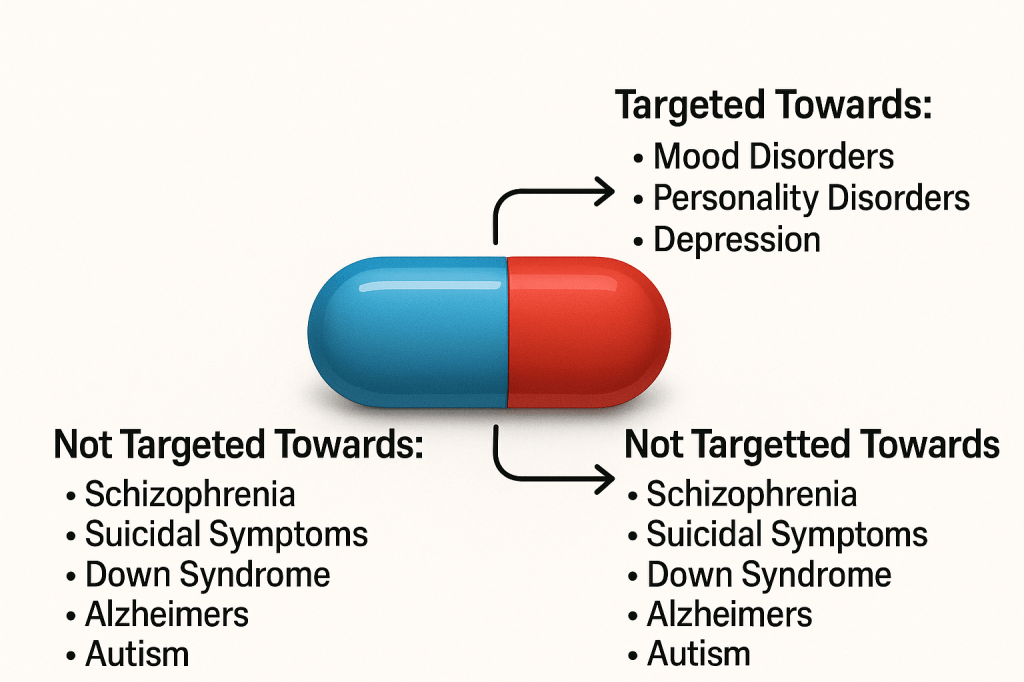
Evidently, there are treatments to these diseases, yet it’s not proven they have a perfect success rate. They mostly have quite a number of side effects, commonly being very emotional, tired or feeling very nauseous some time after taking the medication. Yet, this does not mean these meds are never presicribed, it’s quite the opposite. They are prescribed quite often, especially in anxiety disorders, or depression. They are never a permanent cure though, they are always part of a larger treatment plan to help ‘cure’ the disorder.
The most common medication type used are pills. While they are commonly used in the disorders explained above, they can also be used in ADHD or OCD, yet not as often. They help and calm the patients, and help deactivate the depressive hormones and increase dopamine, the hormone that makes you feel optimistic. These medications help regulate brain chemistry and reduce depressing/distressive symptoms in the patients, and overall help them function normally, though these medication obviously will not work for all disorders.
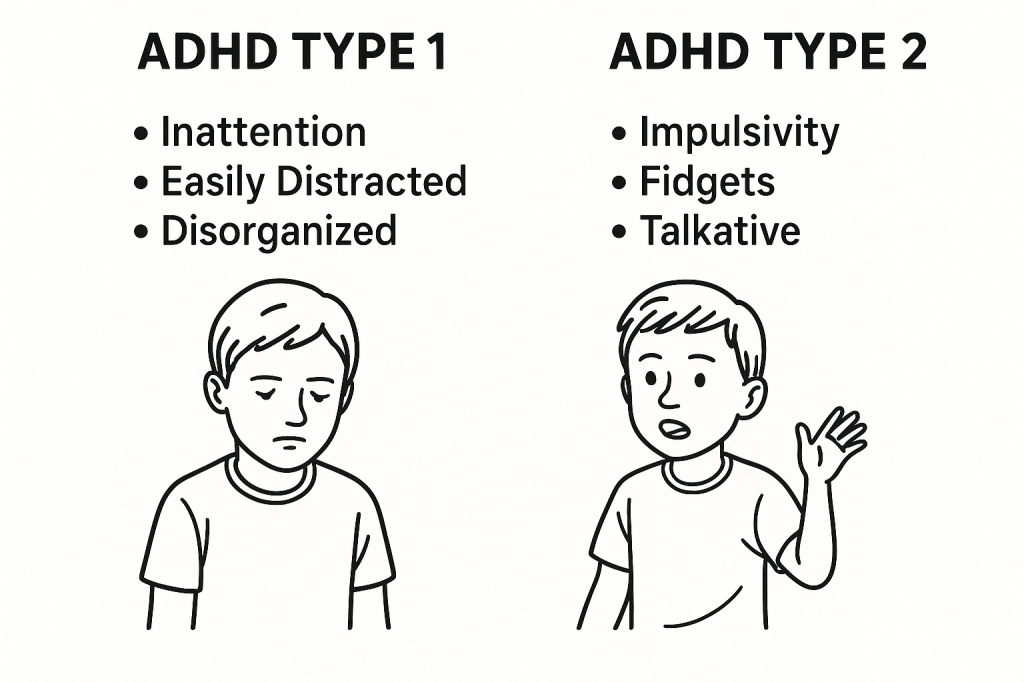
Now, the diagnostic aspects of the brain. Mental disorders as a whole cannot be identified just from a few symptoms; they have to genuinely interrupt everyday activities, such as school or dinner, and contain most symptoms to be properly identified. Usually, some physical tests by doctors are used to identify these disorders, yet multiple certified online tests can be used, though they could be inaccurate, or the patient self-diagnosing themselves. Though, eve after online diagnosation, it is evidently best to consult a local psychatrist or doctor. Adding to the symptoms aspect, not all symptoms have to be present. In ADHD, only a few symptoms are ‘compulsory’, such as inability to stop fidgeting, to be diagnosed with a certain ADHD type.
Yet, with more complicated diseases centered towards the brain sucb as epilepsy or schizophrenia, brain imaging scans are often used, such as CT scans and MRI’s.
In medieval days, mental illnesses are commonly regarded as the disease of the inner spirit during the middle ages. It was assumed that devils, or ‘foul spirits’, would enter a persons body, and make them ‘insane.’ The physical theories of mental illness were;
- Imbalance of the four humors (which back then determined a persons health and wellbeing)
- Blockage of multiple supernatural, healthy ‘forces’ and spirits, thought to be because the patient was a witch or some sort of demon
It was really in the nineteenth century, when the acclaimed Sigmund Freud thought up the idea of a subconcious. He developed the foundation of psychoanalysis, the idea of bringing hidden ideas to the consciousness, and the building block of therapy nowadays. The most common (and highly ineffective) treatment back then was hypnosis, and it was due to the invention of brain-scanning devices that proper treatment for disorders started to be used.
A reason why diagnosting is so important nowdays is the way it impacts indivuals, such as in acts of law. In severe cases of sexual assualt or murder, these alleged ‘criminals’, can technically have no charges pressed against them is if they are mentally damaged, or pleaded insanity. This can also decide upon multiple other important factors, suchh as whether they are suitable for certain types of employments (would someone with severe alzeihmers be quite suitable for customer service), or even eligible for government (or state aid).
Surpisingly, mental illnesses can also affect aging, especially in younh children, pre-puberty/adolescent. The way it impacts is by making the body phsyically incapable, passing aging checkpoints (i.e first steps, first words, jumping) way after it ideally should have done. Around 34% of autists are shorter than average and with less than 7% being taller than average.
}”
Now, I personally think I am finished with this topic, so it’s about time we move on.
Development and Aging
The human brain and body evolves and grows slightly differently deending on the person, but the brain development always stays the same. While the embryo is in the uterus, it slowly starts to develop its brain, starting with the neural tube, and slowly forming other parts such as the brain stem, cerebellum and cerebrum, with the sensory nerves also starting to develop. Finally, during birth, the baby develops nearly all 100 billion neurons, the same as an adult, yet nearly all of them are not mature, and develop until around the age of eighteen. The baby obviously starts to grow, and understand topics, developing multiple of the neurons, maturing quite rapidly. Yet speech, and a lot of similar characteristics are automatically wired into the brain, yet evidently all babies require appropriate simulation to actually develop the characteristics.
Now, the next step of growth is childhood to adolescence, where children develop motor skills and much more concepts that are extremely important during these years.
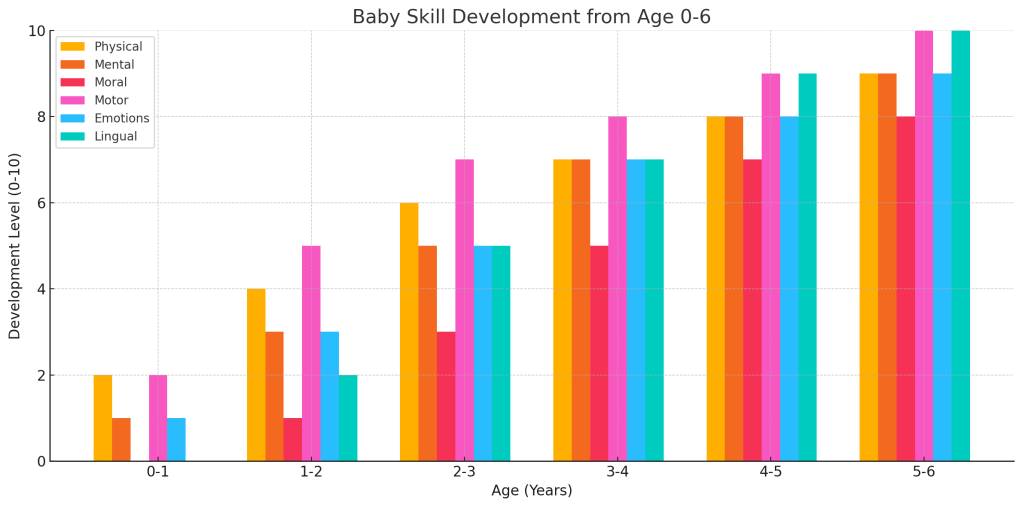
Yet during childhood (five to eleven years of age), there is not much significant development in the brain, except for noticable skill development and maturing through childhood experience, yet it’s really during the teenage/adolescent years that the body significantly changes like it had done during infantry.
Between puberty and early adulthood, the human being goes through a renaissance-like stage. This process is well reflected in impulsive and rebellious behaviour, and eerily sudden personality changes. While all these changes take place, the teenage brain is quite vulnerable, and personality traits like risk-taking may be amplified to the extent that they can cause serious dysfuncton such as addictive drug-taking, criminal-like behaviour, and intense anxiety or depression. Fortunately, in many cases, the issue passes as the brain matures, yet it can sometimes signal the unofrutante start of long-term mental health problems, that can last even throughout adulthood. These changes in the teenage brain (in both genders) are driven by testosterone release, and the hormones make neural pathways extremely flexibile, in the sense that connections can make or break quite easily. On the positive, this allows teenagers to learn new things quickly, and to adapt to new habits and personality traits. Yet, on the negative side, this can lead to easily being influenced, and being more inclined to risk-taking, rebellious and somewhat pessimistic behaviour, which can lead to self-inflicted trauma, in severe cases.
Their pre-frontal cortex is still developing, which is thought to be one reason for teenagers to be more inclined to this sort of behaviour, yet it’s obvious this behaviour can be present due to an addition of enviromental and social factors. The pre-frontal cortex is closely connected to the basal-ganglia which plays a quite important role in the development of motor skills. The fibre that links the two hemispheres in the brain-the corpus collosum-thickens, allowing for increased information to information processing skills.
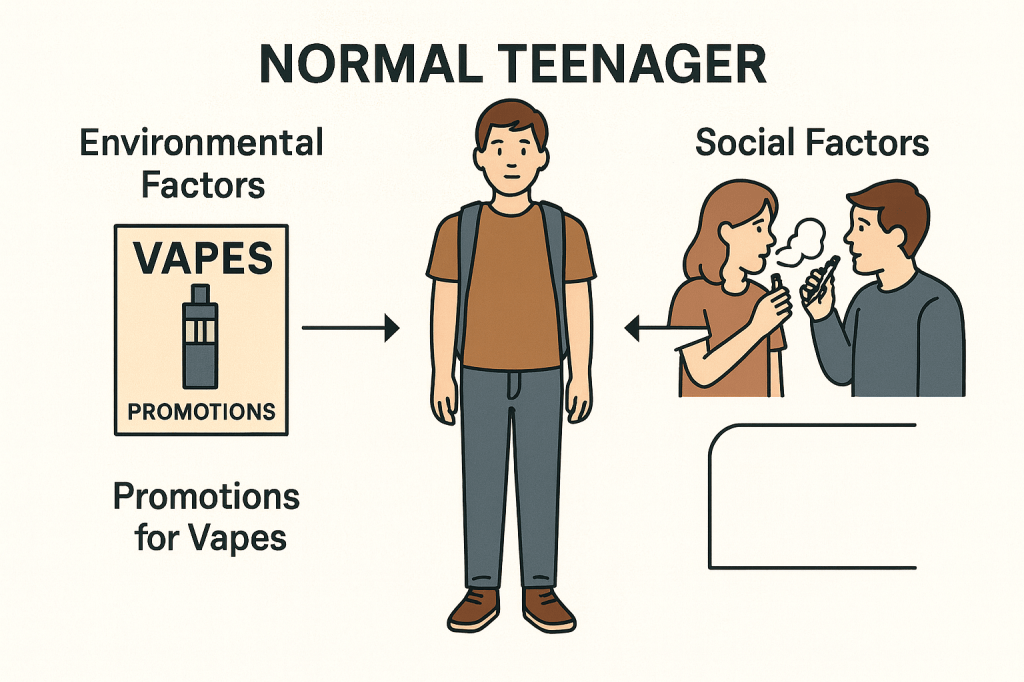
During the teenage years, the patients have a high risk of being diagnosed with a mental illness, commonly ADHD and Anxiety, yet when teenagers experience traumatic events, they are extremely likely to contract a severe disease such as PTSD or Schizophrenia. When these patients near early adulthood, they are likely to contract a substance addiction, commonly alchohol, drugs, or cigarretes.
Most teenagers (commonly women), tend to get quite emotional very easily, thought to be due to the limbic system in the brain, which helps control our emotions. During puberty, the system is surprisingly active compared to any other time period, and this leads to the emotions being extremely prominent, and outbursts of sudden rage, or sadness occuring quite often, During early adulthood, the system matures, helping handle emotions significantly better.
Now during adulthood, the brain doesn’t stop growing. Like any other organ, the brain continues to reform itself long into adulthood. New brain cells continue to be created, and the architecture of the brain is changed constantly in response to life experiences. Humans brains are, compared to most animals, are quite slow to reach adulthood. The prefrontl cortex is the last part to actually become fully active, and full myelination-the sheathing of neuronal connections, which allows information to flow freely along them-does not occur until late into their twenties or thirties. Once the pre-frontal cortex is fully online, it becomes more active in situations that require emotional contenrl Whereas a teenage, or even a child might be overwhelmed by emotion, the prefrontal cortex inhibits emotion when necessary, and so allows for a more thoughtful, deliberated response.
Now, with the creation of new brain cells allow new information to be stored, but their arrival disrupts exisiting memories form in the hippocampus and are tranferred to long term storage in other brain areas. For a while, the memory resides both in the hippocampus and elsewhere. After a few years, the memory is cleared from the hippocampus. Until the memory is fully transferred, the arrival of new cells in the hippocampus may weaken the connections encoding memories stored there.
It is thought that the number of brain cells in the adult brain was fixed early in life and that laying down new memories and learning new things was achieved entirely by changes to existing neurons and their connections with one another. While this sort of rewiring is important for learning, it is now known that adults also benefit from the creation of new brain cells. Neurogenesis, the name for it, occurs mainly in the denate gyrus of the hippocampus. About a third of the neurons in the adult hippocampus are replaced in a person’s lifetime. Adding to this, a person’s brain continues to mature until their late twenties. The main changes take place inside the higher functional areas of the brain, such as the frontal cortex, which gradually becomes more active-pulling together information from the rest of the brain and forming a complex and holistic view of the world. Until then, the emotional parts of the brain are not fully connected with those areas concerned with thought, judgement, and behavioural inhibition. As the connections between the areas become more stable, people tend to react less emotionally and impulsively-instead becoming more cautious, considered, and exercising better judgement.
Now, onto the ageing brain. See, the traditional normalized view (probably thanks to the completely medical accurate ‘Simpsons’) is that the brain and body start to sort of degenerate. This is relatively true, but in the fact that neurons are ..’lost’, and for those that remain, impulses are transmitted much slower than normal. This obviously leads to slowing thought processes, memory problems, and deteriorating reflexes, which causes problems with physical aspects of the body, such as balance and movement.
In the past (meaning ‘cursive handwriting’ level old), it was quite rare for people to live above the age of 50, so we have not evolved much to use the brain in such advanced years. This makes the ageing brain quite a relatively new phenomenom. The degeneration of the brain and nervous system is not caused by a diseasee, and so should not be confused with the pathology of dementia, (which, in fact, is associated with patterns in specific brain changes). Now, recent research shows that most neurons actually remain healthy until you die, but the heart volume and size decrease around 6-10% from the age of 20-90.
One weird thing is that age can affect excitement levels (not in the way you think of, where old people sit around gossiping and yelling at children riding bicycles), but in a scientific kind of way. Dopamine, the neurotransmitter that triggers excitement, rapid decisions and overall happiness. Brain-imaging studdies show that as people age, their dopamine circuits decrease. This is associated in behavioral changes, as dopamine is associated with thrill-seeking and risk-taking. Neurologists believe it is due to the fact that older people seek a quieter life, or even a less thrill life as their dopamine is less abundant. An example could be any holiday where you recieve presents, such as Christmas. Opening presents is highly exciting for childrens and adolescents, but evidently much less so for adults and the elderly, as dopamine is triggered by rewards, or gifts, which also has much less impact as you age.
Now, ageing is not all pessimistic as I had explained before, and there are also positive aspects. The brain can compensate for the effects of ageing, and mental function can even improve with age. Myelin increases in the temporal and frontal lobes in the 45-50 age group could enable people to manage their knowledge better. Not only that, comprehension studies have shown that high-functioning elder adults use both brain hemispheres, which is sort of the brain’s memory to keep thought and memory processes stronger, an apology for making most of the body quite declining and useless.
Now, even newer research into ageing shows that the rate if decline could be slowed by positive lifestyle factors, such as regular exercise. Research has also found that reducing food intake, resulting in lower blood glucose levels, may slow the pace of change, as blood glucose can cause damage to enhancing proteins. Certainly, people with elevated blood glucose lvels, such as those with T.1 diabetes show more signs of brain ageing than non-diabetic people. There are evidently multiple benefits of a healthy lifestyle, such as simulating neural tissue growth. Gentle aerobic exercise, such as rapid walking, regular sleep, a healthy and balanced diet are expected to help delay age-related mental issues such as memory loss.
Now, while the next few paragraphs of this next topic are not exactly connected to the ageing of brains, but rather the ‘Brain of the Future’. While it sounds extremely cliché, the fantasty that has existed since 1984 with The Terminator is now extremely close to being real. As we discover how the brain works, the prospect of changing it, enhancing it, and developing artificial brains is quickly becoming fact rather than fiction, as stated before. Technologies for mind reading, thought control, and AI machines are already with us, and are becoming more sophiscated every day.
When a person is thinking, their brain produces mild electric signals. Neuroscientists have discovered ways in which the eletric signals are able to be picked up by sensors and sent wirelessly and sent to other electrical devices, making it quite possible to move or alter objects by literally pure thought. Most research in this field is directed towards developing devices that are able to help people with nervous-system injuries regain the use of limbs previously paralysed. The technology has also been picked up by multiple game factories, who have produced games that can be played using thought power.
To add to what explained previously on mind reading, the way it’s made is through the neural activity. The ‘picture’ of neural activity created by fMRI scanning can be sort of translated into a accurate description to what a person is seeing and thinking (to some extent). The way this is formed is that the output of the scan, captured while they are looking at a particular image, is processed by sophiscated computer software that translates the pattern of activity into a sort of ‘read aloud’. Such ”mind reading” is made possible as neurons in the visual cortex are specialized for specific stimulti–horizontal/vertical lines, so their firing patterns are indicative of the tyoe of visual stimuli the neurons are registiring. This also helps with lie detection. Now, finally onto the next topic.
The Social & Emotional Aspects
Emotions are generated in the limbic system, explained before as used a lot in adolescents to generate emotionally type responses. Each emotion is produced by a different ‘network’ of brain modules, including the hypothalamus and pituitary gland; which control the hormones that produce physical reactions such as increased heart rate and muscle contraction.
Now, we have evolved a ‘conscious’ emotional system, yet we still retain the primitive, automatic responses at the heart of emotion. An example could be hearing a frightening sound, we register it into the amygdala before we are even conscious of it. While the sensory information is sent to the cortex to be made conscious, the amyglada sends messages to the hypothalamus, which trigger changes that ready the body for fligh, fight, or appeasement. This quick route allows us to take instant action to save ourselves. When we ‘start’ at a loud sound, then relax on realizing that it is harmless. we are experiencing both stages-conscious and unconscious responses and reactions.
When it comes to social and emotional aspects, emotions in nearly everyone are quite conscious, and we’re usually aware of what emotions we’re feeling at every moment, but they’re not something physical, just our brain’s natural response to stimuli, designed to push us away from danger and towards reward or comfort, hence the term comfort zone. Emotions are generated quite constantly, yet there are so much we’re only aware of the predominant ones. (When I say ‘natural response’, while I do mean what our brain’s naturally designed to, but the brain as said before is also affected by environmental factors. Meaning if someone grew up in an area where danger was quite normal and encouraged, the brain will adapt to it’s surroundings and push us to danger.)
Now in itself, emotions are generated in our limbic system, used in a lot of adolescents as explained before. Each emotion is made from a different ‘network’ of brain modules, particularly the hypothalamus and pituitary gland, which control the hormones that produce physical reactions such as severely increased heart rate or even muscle contractions.

